.jpg)
A shift in how people travel
Walking tours are no longer a niche offering in global tourism. In many cities, they have become a standardized product; structured, bookable, and designed to move visitors through neighborhoods rather than between isolated attractions. Travelers are no longer just looking for places to visit; they are looking for ways to experience them.
This shift is already visible in cities like Kyoto, where curated routes through heritage districts are integrated into how visitors explore the city. In Penang, Malaysia, George Town’s transformation into a walkable cultural destination has been reinforced through organized heritage experiences.
These examples reflect a broader structural change. The global tours and activities market within which walking tours play a central role is projected to reach hundreds of billions of dollars, driven by travelers prioritizing immersive and localized experiences. More specifically, heritage walking experiences themselves form a growing segment, with market analyses pointing to sustained demand for culturally grounded, place-based tourism.
The model exists. The demand is proven.
What is striking is that in the Philippines, this category has yet to fully take shape.
A gap hiding in plain sight
Across Philippine cities, the foundational elements are already in place. Heritage districts remain intact, often organized around Spanish-era plazas. Food traditions are not curated for tourists—they are embedded in everyday life. Local businesses operate within neighborhoods that have evolved organically over decades.
Yet these elements remain disconnected.
Visitors experience them individually: a meal, a landmark, a café but rarely as part of a continuous journey. What is missing is not supply, but structure: the layer that connects these components into a single, coherent experience.
This gap becomes particularly visible in Molo, one of Iloilo City’s most historically intact districts.
.jpg)
A district already built for the model
Molo’s spatial structure closely resembles districts where walking tours have successfully developed into full tourism products. A central plaza anchors activity, while heritage landmarks and long-standing food institutions exist within a compact, walkable radius. Movement between stops feels natural, allowing experiences to unfold progressively rather than in isolation.
What makes the district particularly suited to this model is the depth of its culinary ecosystem.
Established institutions such as Kap Ising’s Pancit Molo—whose recipe traces back to family traditions rooted in the early 20th century—continue to define the district’s food identity today, with the dish itself widely recognized as one of Iloilo’s most iconic cultural exports.
Nearby, Panaderia de Molo, one of the oldest bakeries in the region, reflects a different layer of this heritage. Its products—biscocho, bañadas, and other baked goods—are still made from recipes passed down through generations, reinforcing the district’s role in Iloilo’s long-standing pasalubong culture.
Neighborhood vendors like Joanne’s Fish Ball represent everyday street food culture that remains deeply embedded in local life, and these are complemented by newer concepts such as Happy Endings at Molo Mansion and gathering spaces like The Local House, which introduce contemporary layers to the district’s experience
Even the district’s built environment contributes to this continuity. Structures such as the Molo Mansion, originally constructed in 1926 and now repurposed into a cultural and commercial space, illustrate how heritage sites can evolve while remaining integrated into contemporary tourism experiences.
Taken together, these elements form more than a collection of attractions. They represent a layered cultural landscape—one that already contains the ingredients of a walking tour economy.
What has been missing is not the content, but the system that connects it.
.jpg)
Testing the category locally
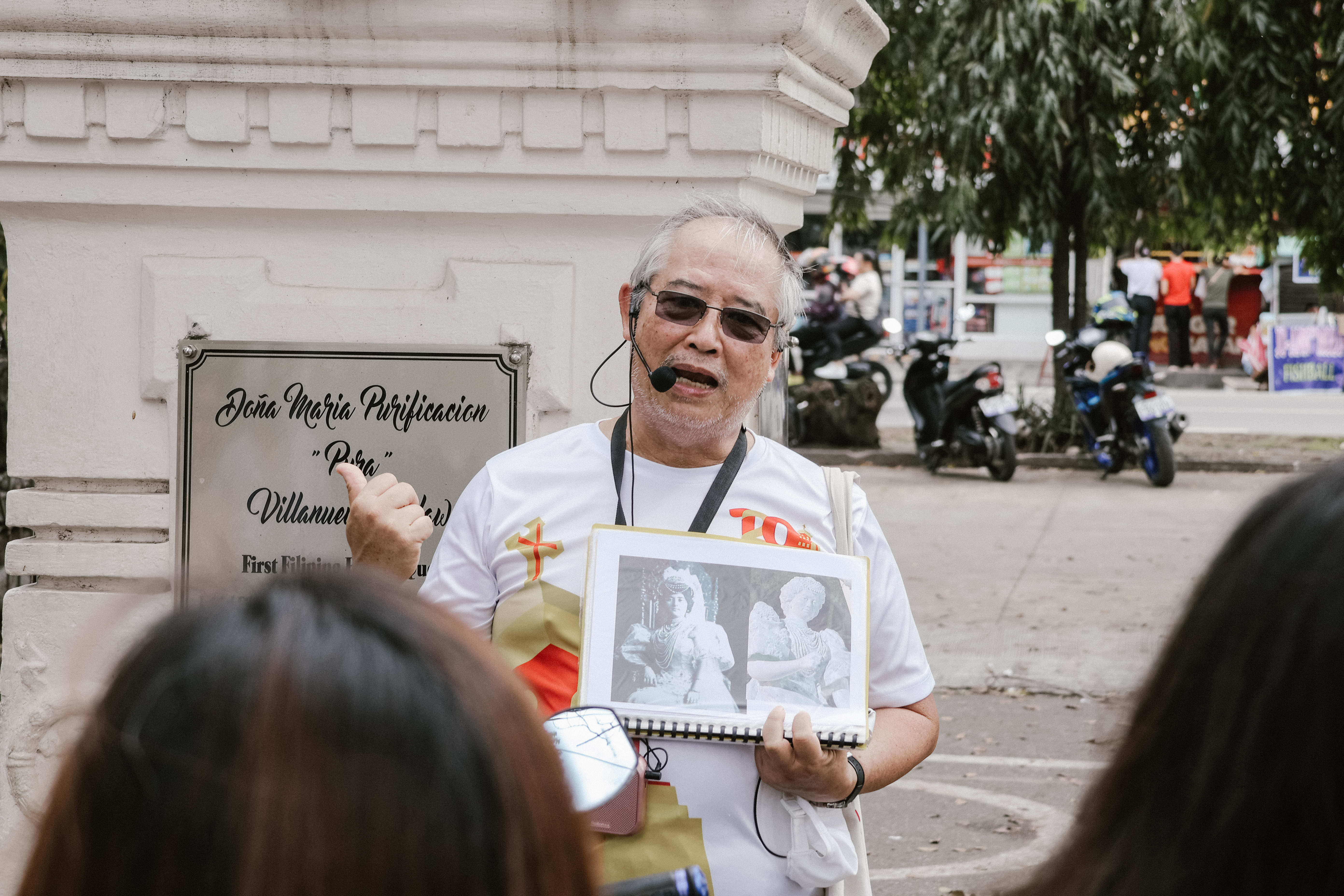
In February 2026, Sowenscale, through We The Curatours, piloted a curated walking experience across Molo. The objective was not simply to run a tour, but to test whether a Philippine heritage district could support a structured, repeatable walking tour model.
The shift introduced by the pilot was subtle but critical. Instead of allowing visitors to navigate independently, the experience was designed—routes were fixed, merchants were coordinated, and storytelling connected each stop into a larger narrative.
What emerged was not just a more organized visit, but a different way of understanding the district.
What the pilot confirms
The strongest outcome of the pilot was clear: participants preferred the structured experience.
They engaged more deeply when the journey was guided, when each stop built on the previous one, and when the experience felt cohesive rather than fragmented. This aligns with broader global behavior, where travelers increasingly seek curated experiences over unstructured exploration, a trend reflected in platforms such as Klook and GetYourGuide, which have scaled by packaging destinations into bookable, narrative-driven activities.
The implication is straightforward.
The Philippine market is not fundamentally different—it is simply underserved.
From places to experiences
What changes when a walking tour is introduced is not just convenience, but perception.
Without structure, a district is experienced in fragments. A café remains a transaction. A landmark becomes a stop. A plaza is simply a space.
With structure, those same elements begin to connect. A dish becomes part of a story. A building gains context. Movement through the district becomes narrative rather than navigation.
This is what transforms tourism from a series of visits into an experience.
The real constraint
If the demand exists and the structure is already present, the question becomes: why has this category not yet developed locally?
The answer lies not in limitations, but in missing systems.
There is currently no standardized way to package these experiences, no widely adopted infrastructure to make them discoverable and bookable, and no consistent framework for delivering storytelling at a level that matches global expectations. Public spaces, while historically significant, are not always maintained or managed with tourism use in mind.
These are not barriers to entry—they are the definition of the opportunity.
Why this model works economically
Walking tours are uniquely positioned to operate within these conditions. Unlike large-scale tourism developments, they do not require new construction. They activate existing environments, relying on coordination, design, and narrative rather than capital-intensive expansion.
This makes them not only scalable, but economically efficient.
Globally, walking tour operators have demonstrated sustainable profitability while maintaining relatively low operational costs. More importantly, they distribute economic value differently—directing visitor spending across multiple small businesses rather than concentrating it within a few establishments.
In this model, tourism becomes embedded within local economies.
.jpg)
What Molo makes visible
The Molo pilot demonstrates that this model can be applied in a Philippine context.
It shows that the urban structure already supports it, that the market demand already exists, and that the experience can be designed and delivered locally.
What remains is the system required to scale it.
A category waiting to be built
The significance of this extends beyond a single district.
In a global tourism landscape increasingly defined by experience rather than destination, cities are no longer competing based on the number of attractions they have, but on how effectively those attractions are connected.
As cities begin to rethink how tourism is experienced—not just where it happens—the opportunity to build structured, walkable, and community-driven experiences becomes increasingly clear.
Initiatives like those being developed by Sowenscale through We The Curatours are only the starting point. The next phase will depend on collaboration—between local governments, businesses, and cultural stakeholders—willing to rethink how districts can be experienced as systems rather than individual sites.
For those interested in shaping how this model evolves in Iloilo and beyond, the conversation is just beginning.
